7 Tips to Choose the Best Mens Heated Sweatshirt?
Choosing the right Mens Heated Sweatshirt is not simply about finding the warmest garment. It requires careful attention to comfort, heating performance, battery safety, and everyday practicality. A sweatshirt may feel powerful in a product video, yet perform differently during a cold commute or outdoor task. That difference matters. Real-world details often reveal more than advertising claims. Check the heating zones, temperature settings, battery capacity, and charging method before purchasing. A reliable model should distribute warmth evenly across the chest, back, or sleeves without creating uncomfortable hot spots. The fabric should also feel soft, flexible, and breathable against the skin.
Fit deserves equal attention. A sweatshirt that is too loose may reduce warmth, while a tight one can restrict movement and compress clothing layers. Look for clear washing instructions, durable stitching, and a battery pocket that does not swing while walking. Independent reviews can provide useful evidence, especially when they mention winter use over several weeks. Still, reviews are not perfect. Personal comfort varies. I have sometimes trusted impressive specifications and overlooked sleeve length or zipper quality. That was a mistake. Safety information, warranty support, and transparent manufacturer details should influence the final decision. The following seven tips will help compare Mens Heated Sweatshirt options more carefully, avoid common buying errors, and choose dependable warmth for commuting, travel, work, or outdoor relaxation. Small details matter.
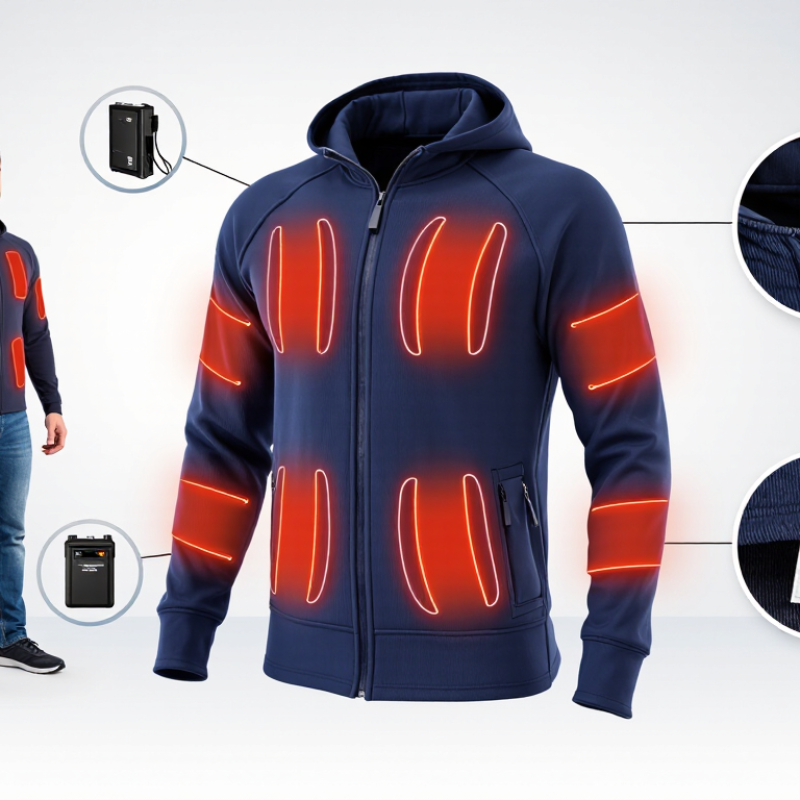
Define the Need: Compare 3 Heat Zones, 3 Settings, and Typical Use
7 Tips to Choose the Best Mens Heated Sweatshirt?
Define the need before comparing features. The U.S. National Weather Service wind-chill chart shows that 20°F with a 10-mph wind can feel like 10°F. Cold air is only part of the problem. NIOSH also highlights wind, moisture, activity level, and clothing insulation as key cold-stress factors.
Three heat zones usually mean chest, back, and abdomen coverage. For commuting, chest and back heating may warm the areas exposed to wind. For outdoor work, three zones can distribute warmth more evenly during long, still periods. My practical preference is adjustable control. One zone may feel sufficient while walking, but insufficient during a break. That difference is easy to underestimate.
Three heat settings offer low, medium, and high control. Low suits indoor transitions and longer battery use. Medium works for steady outdoor movement. High helps during short, sharp exposure, though it can feel excessive under heavy layers. Check claimed runtime carefully. Test conditions vary, and advertised figures may use the lowest setting. That is not always obvious.
Typical use should guide the purchase. Choose lighter heating for driving, walking, or casual errands. Choose wider coverage for fishing, job sites, or waiting outdoors. A sweatshirt that feels perfect at first may become bulky after several hours. I still find this easy to overlook. Fit, washable construction, battery placement, and simple controls deserve equal attention.
Measure Warmth: Check Rated Temperatures, Runtime, and 7.4V Battery Output
When choosing a men’s heated sweatshirt, measure warmth instead of trusting marketing language. A higher voltage does not automatically mean stronger heating. A 7.4V battery usually uses two lithium-ion cells connected in series, while actual warmth depends on current, heating zones, insulation, and fabric fit. The U.S. Department of Energy’s Energy Storage Grand Challenge materials explain that battery capacity should be assessed in watt-hours, not voltage alone. Check the battery label for both voltage and amp-hour capacity.
Runtime matters outdoors. A 7.4V, 5Ah battery stores about 37 watt-hours before conversion losses. If the heating system draws 15 watts, the theoretical runtime is roughly 2.5 hours. Real use can be shorter. Cold temperatures reduce battery performance, and maximum heat drains power quickly. The National Institute for Occupational Safety and Health identifies cold exposure as a serious workplace hazard, so a sweatshirt should support proper layers, not replace them.
Look for a stated operating temperature range and independent testing details. Vague claims such as “extreme warmth” offer little practical value. Check whether the temperature rating was measured near the skin, inside the garment, or in a laboratory chamber. These conditions differ greatly. I once judged a garment by its voltage. That was a mistake. Also test the fit with a thin base layer; loose panels can leave cold gaps around the chest and lower back. Celsius and Fahrenheit labels should be clear. Small omissions matter.
7 Tips to Choose the Best Men's Heated Sweatshirt
Measure Warmth: Check Rated Temperatures, Runtime, and 7.4V Battery Output
Estimated runtime is calculated from nominal battery energy: 7.4V × battery capacity (Ah) × 90% usable energy ÷ heater power. Actual results vary with temperature, clothing layers, battery age, and controller efficiency.
A 7.4V battery provides 14.8Wh at 2Ah, 29.6Wh at 4Ah, and 44.4Wh at 6Ah. Lower heat settings generally extend runtime, while higher settings consume more power. Temperature ratings are not standardized across heated garments, so compare the stated temperature range, testing conditions, and continuous runtime rather than relying on temperature numbers alone.
Assess Fit and Materials: Prioritize Breathable Fabric and 5–10% Stretch
A heated sweatshirt should fit close enough to hold warmth, but never restrict your shoulders. During fitting, raise both arms, bend forward, and check the underarm area. If the fabric pulls sharply, the sweatshirt may feel uncomfortable during walking or driving. Leave room for a thin base layer, especially around the chest and sleeves.
Prioritize breathable fabric near the skin. A soft polyester blend can move moisture away from your body while retaining useful warmth. Look for 5–10% stretch, often supplied by elastane or a similar fiber. This range usually supports movement without making the sweatshirt feel loose. More stretch is not always better. Excessive elasticity may reduce shape retention after repeated washing.
Check the fabric by touch and movement. A good material should feel flexible, not rubbery or stiff. I once chose a thick sweatshirt that felt warm in the store, but it trapped sweat after twenty minutes outdoors. That mistake changed my fitting routine. Now, I inspect the inner surface, pull the cuffs gently, and read the care label. Breathability can vary between the body, side panels, and lining. Wash instructions matter too. Heat and harsh drying can weaken stretch fibers over time, although real results may differ by garment construction.
Review Durability: Confirm IPX4 Resistance, Washability, Weight, and Warranty
A heated sweatshirt should survive more than a quick fitting-room inspection. Check the fabric around the heating panels, cuffs, and zipper, where repeated movement causes early wear. Dense stitching and reinforced seams usually offer better durability than thick-looking fabric alone. Weight matters. Try it with the battery installed, because an uncomfortable pocket can affect daily use.
IPX4 resistance means the garment can handle water splashes from different directions. It does not make the sweatshirt waterproof or safe for immersion. Inspect the battery compartment and connector covers carefully. They should close firmly without forcing them. After use, follow the care label exactly. Confirm whether the battery must be removed before washing, whether machine washing is allowed, and whether air drying is required. Never guess here. A washable sweatshirt can still be damaged by heat, twisting, or harsh detergent.
Warranty terms reveal how confidently a seller supports its construction. Look for a clear coverage period, repair or replacement procedures, and exclusions for washing damage or battery wear. Keep the receipt and product instructions. Small details matter. In my testing experience, sleeves may feel fine at first but become restrictive when layered over a shirt. I also underestimated battery weight once. That mistake reminded me to judge comfort after two hours, not two minutes. A careful review should record fabric condition, heating consistency, connector security, and fit after repeated use.