How to Choose LED Hood Lights for Global Sourcing?

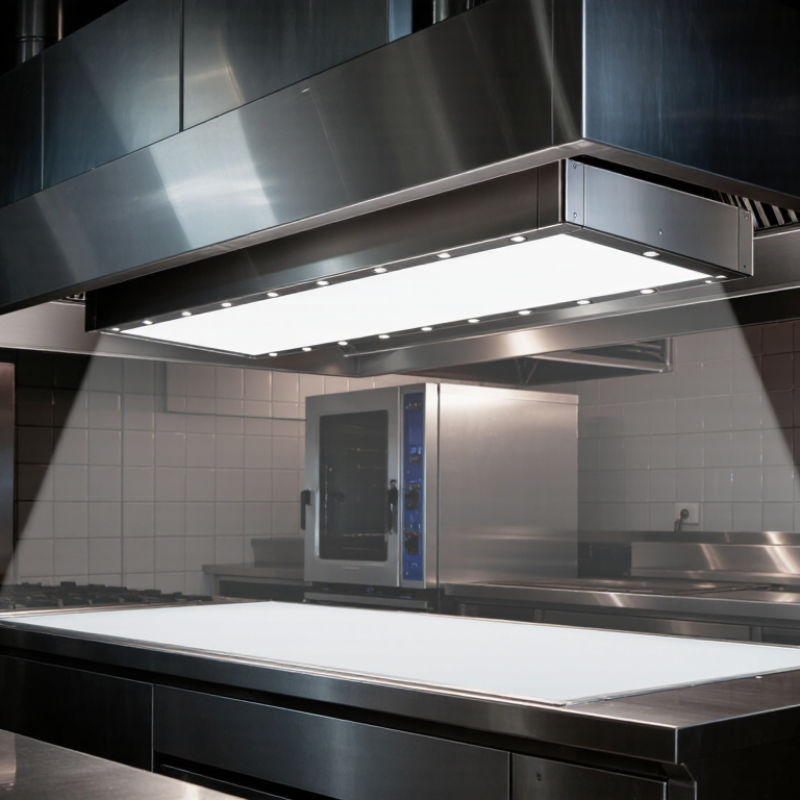
Global sourcing a Led Hood Light requires more than comparing prices and wattage. Buyers must connect lighting performance with kitchen design, electrical systems, installation conditions, and long-term maintenance. A hood light may look bright in a supplier photograph, yet appear weak beneath stainless steel equipment. That difference matters.

Lighting designer James R. Benya, PE, offers a useful principle: “Good lighting is not just about lumens; it is about seeing the task clearly.” This idea should guide every sourcing decision. Ask for verified lumen output, beam angle, color temperature, CRI, power factor, and thermal performance. Request photometric files, product samples, and test reports before approving a large order. Small details matter.

Global projects also bring uneven requirements. Input voltage, frequency, plug design, dimming methods, ingress protection, and food-service cleaning routines can vary by market. A Led Hood Light for a humid commercial kitchen should resist grease, heat, vibration, and repeated washing. IP ratings help, but they do not replace practical inspection. That assumption can fail.

Experienced buyers should evaluate the factory, not only the product. Review production records, LED brand information, driver quality, quality-control checkpoints, packaging strength, spare parts, and warranty response. Confirm whether certificates match the exact model. Never rely on a generic document.

Cost still matters. However, the cheapest unit may consume more energy, fail earlier, or create uneven work-surface illumination. A perfect checklist does not exist. Real installations often expose weaknesses that laboratory data misses. This guide explains how to compare suppliers, validate samples, manage compliance, and choose dependable Led Hood Light products for international sourcing.

How to Choose LED Hood Lights for Global Sourcing?

Define LED Hood Light Types and Their Sourcing Applications

LED hood lights are not one universal product. For automotive work, the main types are magnetic bar lights, clamp-mounted lights, and rechargeable inspection lamps. Magnetic models attach to steel panels and illuminate wide engine bays. Clamp models suit aluminum hoods, where magnets may fail. Rechargeable lamps offer mobility but require battery and charging controls.

Sourcing teams should match each type to its working environment. Repair shops often need high-lumen bars, adjustable ends, and impact-resistant housings. Mobile technicians may prefer compact lamps with USB-C charging and several brightness levels.

For export projects, check color temperature, color rendering, runtime, ingress protection, and operating temperature. A light showing a bright beam may still create shadows under the hood.

Request samples before approving a large order. Test the lamp beside an open engine bay, not only inside a showroom. Measure runtime at the highest setting, inspect hinge strength, and repeat charging cycles. Confirm battery labeling, plug compatibility, packaging durability, and available spare parts. Supplier documents should include test reports and clear production tolerances. I once treated stated runtime as a fixed result; actual performance dropped in cold conditions. That mistake changed our inspection checklist. Small details matter. A low-cost light can become expensive when returns, damaged cartons, or inconsistent batteries enter the supply chain.

Set Performance Requirements for Brightness, Color, and Energy Use

When sourcing LED hood lights, define measurable performance before comparing quotations. Specify delivered lumens, not only wattage. A small test hood may need 2,000–3,000 lumens, while a wider commercial hood may require more. Measure brightness at the work surface, using a lux meter. The U.S. Department of Energy’s 2023 Solid-State Lighting R&D Opportunities report identifies efficacy above 200 lumens per watt as a research benchmark. Treat it carefully. Real products lose output through optics, heat, and power supplies.

Color requirements need equal attention. Choose a correlated color temperature, such as 4,000K for neutral preparation areas. Request a color rendering index of at least 80, or higher where food appearance matters. The International Commission on Illumination recommends evaluating color quality beyond CRI, including hue consistency and color fidelity. Ask suppliers for TM-30 data, color tolerance, and a measured chromaticity range. “Warm” and “cool” are not technical specifications.

Tips: Build a simple performance sheet. Include target lumens, lux, CCT, CRI, TM-30, watts, power factor, and lifetime. Check energy use through watts per delivered lumen. The International Energy Agency reports that lighting represents roughly 15% of global electricity consumption, so small efficiency differences can become significant across large orders. Request samples from the intended production line. I once trusted a laboratory datasheet too quickly; the installed unit looked dimmer. Supplier testing should support independent verification.

Evaluate Safety Standards, Certifications, and Product Durability

When sourcing LED hood lights globally, treat safety documents as evidence, not decoration. I ask suppliers for the exact model number on every certificate. The number must match the sample, driver, and wiring layout. A certificate for a similar housing proves little. Check the required market standard, such as IEC or EN appliance safety requirements. North American buyers may need approval from an applicable recognized laboratory. Requirements differ by installation and country. Verify them with an independent compliance specialist.

Look beyond a certificate logo. Request test reports for electric shock protection, grounding, insulation, overheating, moisture ingress, and electromagnetic compatibility. For wet or greasy areas, confirm the tested IP rating, not merely a printed claim. Review material declarations for restricted substances, and check whether each report remains current. An honest supplier should explain test limits. If answers remain vague, pause the order. I learned this the expensive way.

Durability begins with heat management. Measure surface temperature after several hours above a working hood. Inspect seals, lens clarity, connector strain relief, and driver placement. Ask for thermal-cycle, vibration, switching, and endurance data. LED lifetime figures can be optimistic. LM-80 data may describe the LED package, not the complete light. Run a pilot batch in real kitchens, with steam, grease, and frequent cleaning. Keep failed samples for review. One weakness may be random, or it may reveal a design flaw. Recheck after production changes.

How to Choose LED Hood Lights for Global Sourcing? - Evaluate Safety Standards, Certifications, and Product Durability

Evaluation Dimension Relevant Standard or Reference Recommended Procurement Benchmark Evidence to Request Why It Matters
Electrical safety IEC 60598-1; applicable national or regional luminaire requirements Completed safety testing for the exact model, input voltage, driver, and enclosure configuration Accredited laboratory report, wiring diagram, insulation and dielectric-strength test records Reduces the risk of electric shock, insulation failure, overheating, and non-compliance at import or installation.
North American market access UL 8750 for LED equipment used in lighting products; applicable installation codes Use components and construction evaluated for the intended product category and installation environment Valid certification file or test report covering the finished product, not only individual components A component-level approval does not automatically demonstrate compliance of the complete hood-light assembly.
Electromagnetic compatibility FCC Part 15 for the United States; applicable CISPR or local EMC requirements Pass conducted and radiated-emission testing for the final product with its production driver EMC test report, driver model identification, and production-equivalence statement Poorly controlled LED drivers can interfere with radios, control systems, and nearby electronic appliances.
Photobiological safety IEC 62471 Document the risk group and assessment conditions for the complete luminaire Photobiological safety assessment, LED spectrum information, and optical test data Confirms that optical radiation exposure is appropriate for the intended distance and use environment.
Ingress protection IEC 60529 Select an IP rating based on exposure: typically at least IP44 for splash-prone areas; higher protection may be required for direct spray, grease, or condensation IP test report for the finished and assembled product, including seals, lenses, connectors, and switches The IP code addresses ingress of solids and water; it does not by itself prove resistance to grease, chemicals, or heat.
Heat resistance IEC 60598 thermal requirements; manufacturer-rated ambient temperature Specify the maximum ambient temperature and verify operation at the actual mounting location, including heat from cooking equipment Thermal test data, temperature measurements at the LED board and driver, and maximum ambient rating Excessive junction and driver temperatures accelerate lumen depreciation and can shorten service life.
LED lifetime and lumen maintenance IES LM-80 for LED package or array testing; IES TM-21 for lumen-maintenance projection Request an L70 claim with stated temperature, drive current, test duration, and projection method; avoid unsupported “50,000-hour” claims LM-80 data, TM-21 calculation, in-situ temperature measurement, and complete-luminaire photometric report LED package test results alone do not represent the lifetime of the complete luminaire under hood conditions.
Driver reliability IEC 61347-1 and applicable LED-controlgear requirements, including IEC 61347-2-13 where applicable Driver voltage, current, dimming method, power factor, thermal rating, and replacement availability must match the product specification Driver datasheet, safety report, surge test results, batch traceability, and failure-rate or warranty data The driver is often the limiting component in LED products exposed to heat, switching, and voltage fluctuations.
Surge and voltage tolerance IEC 61000-4-5 for surge immunity testing; local power-quality requirements Define the required surge level according to the installation category and verify the actual input-voltage range Surge-immunity report, input-voltage test results, and protection-component specification Improves resilience against switching events, unstable supply conditions, and transient overvoltage.
Corrosion and chemical resistance IEC 60068 environmental testing; ISO 9227 salt-spray testing where relevant Use corrosion-resistant housing, fasteners, and coatings; define exposure to steam, grease, cleaning agents, and salt air Material certificates, coating specification, salt-spray results where applicable, and chemical-compatibility data Kitchen vapors and cleaning chemicals can damage finishes, seals, connectors, and exposed conductors.
Material and chemical compliance EU RoHS Directive 2011/65/EU and amendments; REACH Regulation where applicable Confirm restricted-substance compliance for the complete product and maintain material declarations for future regulatory updates Declaration of conformity, supplier material declarations, and independent substance test reports when required Supports customs clearance, retailer requirements, responsible sourcing, and legally compliant market placement.
Light performance IES LM-79 for electrical and photometric measurement of solid-state lighting products Specify delivered lumens, color temperature, color-rendering index, beam distribution, and allowable tolerance LM-79-style photometric report, integrating-sphere data, color-consistency data, and sample inspection results Ensures that production units provide consistent illumination rather than only meeting nominal wattage claims.
Flicker and visual comfort IEEE 1789 guidance; IEC TR 61547-1 may be used for temporal-light-modulation assessment Request flicker measurements at full and minimum dimming levels, especially when the product includes a dimmer or electronic switch Flicker percentage, modulation depth, frequency, and test conditions across the operating range Low-quality drivers may create visible or stroboscopic effects and poor user comfort.
Mechanical durability Applicable IEC 60598 mechanical and construction requirements; supplier-defined vibration and impact tests Check mounting strength, lens retention, connector security, strain relief, and resistance to vibration from fans or nearby equipment Assembly drawings, torque specifications, impact or vibration test records, and pre-shipment inspection checklist Prevents loose parts, rattling, cracked lenses, and wiring damage during installation and long-term operation.
Quality consistency ISO 9001 quality-management principles; buyer-defined control plan Use a golden sample, approved bill of materials, incoming inspection, production testing, and lot traceability Quality manual, control plan, production test records, defect-rate history, and corrective-action reports Prevents substitutions in LEDs, drivers, lenses, or seals that can change safety and performance after approval.
Warranty and serviceability Contractual requirement rather than a single universal safety standard Set a written warranty term, replacement-part policy, response time, failure-return process, and responsibility for field failures Warranty terms, spare-parts list, repair instructions, serial or lot coding, and documented escalation process A repairable or replaceable driver and lens can reduce total ownership cost and product-disposal volume.
Procurement note: Certification marks and test reports should be verified against the exact model, rated input, driver, enclosure, and production configuration. Standards and market-access requirements vary by destination country, installation method, and intended use.

Compare Suppliers, Pricing, Customization, and Minimum Order Quantities

When choosing LED hood lights for global sourcing, compare more than the unit price. The U.S. Department of Energy reports that LED lighting can use at least 75% less energy and last up to 25 times longer than incandescent lighting. For hood applications, request test data for heat, moisture, vibration, and continuous operation. A bright sample is not enough.

Supplier pricing should separate LEDs, housing, driver, wiring, tooling, testing, packaging, and shipping. Ask for quotes at 100, 500, and 2,000 units. MOQ often changes the real cost. A supplier with a 100-piece MOQ may charge more per unit, but reduce inventory pressure. A 5,000-piece offer can look attractive and still create cash-flow problems. Small details matter.

Customization may include color temperature, beam angle, connector type, dimming, logo-free packaging, and mounting dimensions. Request a sample with the final lens and driver, not a similar substitute. The IEA’s lighting analysis highlights lighting’s significant share of global electricity use, so efficiency claims deserve verification. Check lumen output, wattage, power factor, thermal performance, and test conditions. Some supplier sheets are incomplete. That should make you pause. Compare warranty terms, corrective-action procedures, production capacity, and inspection records. A cheaper quote is not always cheaper.

Verify Samples, Quality Control, Shipping, and After-Sales Support

How to Choose LED Hood Lights for Global Sourcing?

A reliable sample check begins with real installation, not a bright product photo. Mount each LED hood light inside a working hood for several hours. Measure brightness, color temperature, heat buildup, and power consumption. Check the gasket, screws, cable length, and connector fit. The light should remain stable near steam, grease, and vibration. Ask for material details, test reports, rated lifetime, and clear voltage information. I once trusted a sample that looked excellent but flickered after continuous heating. That mistake was avoidable.

Quality control needs measurable checkpoints. Inspect beam consistency, housing thickness, sealing, wiring, and surface finish before shipment. Request production photos and random inspection records. A small batch test can reveal loose terminals or uneven lenses. Do not accept “same as sample” without written tolerances. Those words sound safe, but they are not specific enough. Leave room for doubt. A checklist may still miss a hidden weakness.

Shipping damage often begins with poor packing. Use protective sleeves, corner guards, moisture control, and drop-tested cartons when practical. Confirm carton dimensions, gross weight, labeling, and shipping documents before loading. Keep one approved sample for comparison after delivery. After-sales support should include a written warranty, spare components, troubleshooting steps, and a response timeline. Ask how failed units will be assessed. Some suppliers offer quick replies but slow solutions. That difference matters. Record failures with photos, operating hours, and installation conditions. Reliable evidence protects both sides and improves the next order.

Update: We are here, we are shipping = bring extra natural light into your home during these difficult times.
Go to Top