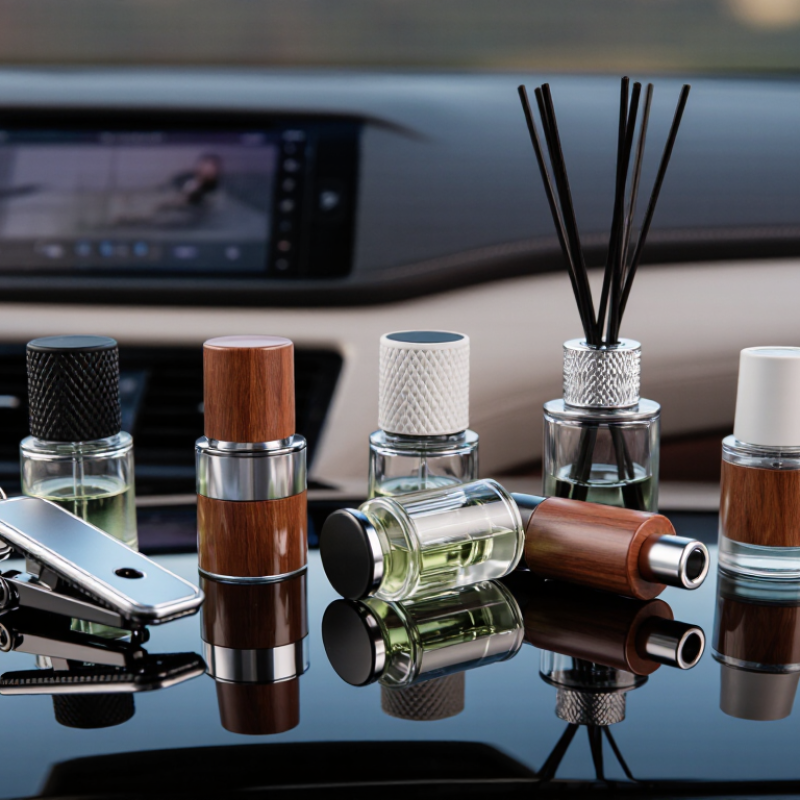
| Ultrasonic water-based diffuser | Wholesale Quality Checks: IFRA Standards, SDS, and Fragrance Ingredient Data For wholesale car perfume diffusers, a pleasant scent is only one quality check. Buyers should request the current IFRA Certificate of Conformity for the intended product category and fragrance concentration. IFRA Standards restrict or prohibit certain fragrance materials; they do not replace local product-safety obligations. Check that the certificate matches the exact formula, not merely the fragrance name. Small differences matter.
Ask for a current Safety Data Sheet and review its 16-section structure, especially hazard identification, handling, exposure controls, and transport information. OSHA’s Hazard Communication Standard uses this standardized SDS format. Request fragrance ingredient data as well, including substance identifiers and concentration ranges where disclosure rules allow. It helps assess allergens, formula consistency, and changes between production batches. Keep records.
Market demand makes documentation practical, not decorative. Grand View Research estimated the global air-freshener market at USD 12.7 billion in 2023, though this figure covers more than car diffusers. It signals a sizable category, not proof that any one scent will sell. Test samples in a warm parked vehicle and inspect leakage, material compatibility, and scent strength after several days. I would also retest a later batch; paperwork can look perfect while the aroma drifts. Wholesale Quality Checks for Car Perfume Diffusers A Safety Data Sheet (SDS) follows a standardized 16-section format. Use it alongside the applicable IFRA conformity documentation and fragrance ingredient data when reviewing a supplier. The chart groups the 16 SDS sections into four equal ranges. An SDS does not replace an IFRA certificate or ingredient disclosure; requirements and applicable IFRA use limits depend on the product and destination market. Performance Testing: VOC Emissions, Leak Resistance, and ASTM D5116 Methods For wholesale buyers, fragrance strength is only part of performance. A diffuser should also release predictable amounts of volatile organic compounds (VOCs) and remain sealed during shipping. ASTM D5116 is a guide for measuring organic emissions from products in small environmental chambers. It is not a car-diffuser certification. Ask suppliers for the chamber conditions, sample preparation, and analytical method behind their results. Temperature and airflow matter; a warm test can produce different readings from a cool one. Good data shows test duration and emission rates, not just a single total VOC figure. Details matter. Leak resistance needs a separate, practical check. Fill units to the intended level, then store them upright, sideways, and upside down in controlled conditions. Inspect caps, seams, and absorbent inserts for wetness or staining. Repeat after temperature cycling and vibration that resemble warehouse handling. A faint oily ring on a carton may signal a real packaging issue, even when the bottle looks intact. Record leakage by unit and test condition, rather than relying on one successful sample. Combine chamber testing with repeated leak checks across production batches. Retest after changes to fragrance concentration, materials, or closure design. Results from a single batch can be reassuring, but they do not prove every shipment will behave the same way. Some variability is difficult to eliminate; report it plainly and set acceptance limits before placing a large order. Bulk Buying Criteria: MOQ, Unit Cost, Packaging, and Supplier Documentation For wholesale buyers, the best car perfume diffuser is not always the one with the lowest quoted price. Start with minimum order quantity and ask whether it applies to each fragrance, color, or packaging style. A supplier may offer a manageable total MOQ but require hundreds of units per scent. Request a written quotation that separates the diffuser, fragrance refill, carton, and shipping costs. Small details matter: a loose cap or scratched finish can turn a low unit cost into avoidable returns.
Packaging should protect glass bottles and keep components organized during transit. Ask for photos of the inner tray, outer carton, and finished retail box, then confirm the carton dimensions and packing quantity. Samples help, but one sample cannot prove that an entire production run will match. Check whether the supplier can provide consistent batch records and clear instructions for storage and use.
Before paying a deposit, request relevant supplier documentation, such as a business profile, product specifications, material details, and available quality inspection records. Confirm lead time in writing, including sample approval and production stages. I would also ask how defects are handled. The answer may be vague at first; that is a reason to clarify terms, not assume the problem will be solved later. A simple spreadsheet comparing MOQ, landed unit cost, packaging, and documents can make competing offers easier to judge. FAQS Vent clips use airflow across a scented pad or cartridge. Hanging bottles use a wick or porous cap. Gels and cards release scent more gradually. It depends on the vehicle and preferred scent strength. Vent clips can feel stronger when the fan runs. Passive gels may smell faint in cold weather. Temperature, sunlight, fan speed, and cabin size all matter. A unit near a sunny windshield may fade sooner. Test it in different conditions. Check the housing, scent medium, wick, clip, seals, and refill parts. A loose cap can leave a small oily mark on the packaging. Test it on both narrow and wide vent slats. A clip that slips during ordinary handling may be frustrating. It guides measurement of organic emissions in small environmental chambers. It is not a car-diffuser certification. Ask how samples were prepared and tested. Store filled units upright, sideways, and upside down. Check for wetness or stains, then repeat after temperature changes and vibration. Warmth and airflow can change emissions and fragrance release. A single total VOC figure leaves out useful details. No. Retest across batches and after changes to fragrance, materials, or closures. One good sample is not a guarantee. Some variation remains. Conclusion This guide compares seven types of Car Perfume Diffuser for wholesale buyers, explaining how each format delivers fragrance and how capacity, operating time, and refill compatibility affect everyday use. It also introduces the main components to consider when assessing product design, durability, and ease of maintenance, helping buyers match diffuser options to customer needs and intended retail positioning.
Before placing a bulk order, buyers can use a practical checklist covering fragrance documentation, including IFRA standards, safety data sheets, and ingredient information. The guide also outlines performance checks for emissions, leak resistance, and testing methods such as ASTM D5116, alongside key purchasing factors such as minimum order quantity, unit cost, packaging, and supplier documentation. Together, these points support a more informed comparison of product quality, operating performance, and wholesale value. |